
01
Wind direction
Wind alone isn’t enough. You need to know where it comes from and how it enters the spot, because the same direction can create very different conditions depending on the beach.
School founded in 2010 · Teaching since 2005
We know every beach in Tarifa after more than 20 years on the water. Discover the main kitesurfing spots and what to consider when choosing where to ride based on the wind, the sea conditions and your level.
Before choosing a beach or entering the water in Tarifa, there are three things you should always check. Knowing how many knots the forecast shows isn’t enough: the wind direction, the space available to set up and fly the kite and the right kite size determine whether a spot is appropriate at that moment.
01
Wind alone isn’t enough. You need to know where it comes from and how it enters the spot, because the same direction can create very different conditions depending on the beach.
02
Before launching the kite, check that there is enough safe space, taking into account obstacles, people, other kites and the characteristics of the launch area.
03
The wind’s strength and evolution help you decide which kite size to use. You also need to consider the rider’s weight and level, the type of equipment and the real conditions before entering the water.
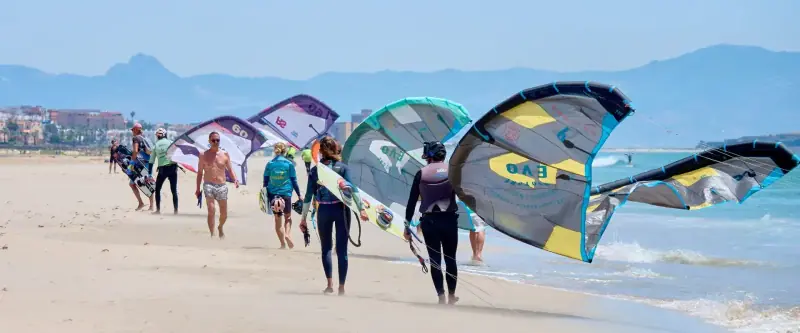
These are the spots where we usually ride and teach. Each one works best in specific conditions:
Tarifa’s longest beach, with kilometres of sand and plenty of space to launch. It works with levante and with poniente and is the usual spot for lessons and progressing riders. Keep the marked swimming areas in mind in summer.
Tarifa’s most famous cove. In certain conditions it offers areas of more sheltered water, ideal for first rides and for wingfoil. It’s also where you’ll find the biggest kiter scene.
At the northern end of Valdevaqueros, next to the dune. With poniente it delivers clean wind and small waves for getting started in strapless.
Between Tarifa and Los Lances, at the river mouth. A wide spot with a sandy bottom, comfortable with poniente.
Tarifa’s urban spot, next to the port. Strong, accelerated wind with levante: for expert riders only. Spectacular for watching the top local level ride.
The day’s choice is never fixed: in class we decide based on the actual wind, the sea state and your level. Check the forecast on Windguru →
for the conditions
In Tarifa, choosing where to enter the water depends on much more than the amount of wind. The direction, the sea state and the characteristics of each beach can make one area more suitable than another.
It’s also important to assess your riding level. Conditions that feel comfortable for an experienced rider may not be right for someone who is still learning.
Before entering the water, weigh the forecast against the spot’s real conditions and against what you can safely handle.
It depends on the day’s wind. Los Lances and Valdevaqueros are the usual teaching spots: wide, with sandy bottoms and space to work safely. At Subcielo we choose the spot every day according to the conditions.
Yes. Tarifa has wind most of the year thanks to the Strait. In summer there are marked areas for swimmers, and in winter a wetsuit is essential, but you can ride in every season.
The levante blows from the east, is usually stronger and gustier, and accelerates especially at Balneario and Los Lances. The poniente blows from the west, more constant and thermal, and leaves very comfortable conditions at Valdevaqueros, Punta Paloma and Río Jara.
Yes, in high season there are marked swimming areas and entry and exit channels. Riding with a local school saves you fines and scares.
A good forecast doesn’t mean any beach is suitable to ride. Before entering the water, weigh the day’s wind against the spot you’ve chosen and against your experience.
If you’re still learning or want to improve your riding, the day’s conditions can also determine which course option suits you best.
Follow us on Instagram
Wind, lessons and Tarifa life, every day in your feed.